This article first appeared in the 2013/2014 edition of the Natural Choice Directory for the Willamette Valley. I first learned about the Russells and their unique investing philosophy when profiling Jeff Broadie and Casey White of Lonesome Whistle for my article on part time farmers for the November/December 2012 edition of In Good Tilth, the magazine of the Oregon Tilth.
...............................................................................................................................................
The rain has stopped for the moment on this overcast spring morning, but it’s threatening to come back any time now. Janet Russell, a slim, grey-haired woman, has slipped on a pair of high rubber boots and a big straw hat to venture out in the muddy pasture with a handful of bovine treats.
Calpurnia, a bold Jersey cross-breed heifer ambles up to eat from Janet’s hand. The milk cow’s shy offspring, steers Janet has affectionately christened Bulwinkle and Meatball, forgo the treats for the shelter of the fir trees they've been browsing under.
It’s too early and cold to plant yet, so the beds in her sprawling organic garden are mostly empty, save for some hardy winter greens and perennials waiting for warmer weather to bloom. A multi-hued flock of chickens, guinea fowl and ducks flutter about the yard closer to the house, scratching for scattered grain.
The modest, single-story ranch house on seven acres of farmland just east of Fern Ridge Reservoir that Janet and her husband Jerry Russell share is a picture-perfect slice of Americana. People across the country aspire to a lifestyle like the Russells’, living quietly in the country and growing enough food to fill the pantry and share with friends and neighbors. According to the 2007 Census of Agriculture, retirement farms make up 21 percent of the county’s total farms, with so-called lifestyle farms accounting for another 36 percent.
“I read the Mother Earth News and other publications back when I was a teenager and always wanted to have a small farm,” says Janet. But when she came into an inheritance, Janet and her husband realized they could do more than just buy a snug little place in the country. What sets the Russells apart from other retiree and hobby farmers is the depth to which they have invested in the local agriculture community.
Saturday, January 18, 2014

Monday, May 20, 2013
Social media: Diving in, the right way
Earlier, I talked about the value of adding social media to a nonprofit’s communications toolkit. Social media is free. Millions use it every day. So why not dive in?
Why not? Because a poorly run social media campaign may hurt your organization by making it look unprofessional, unhip or unpopular. As the marketing firm CAWOOD says, don’t use social media if you don’t have the time and resources to put into the campaign or if you don’t understand the specific social media platform you sign up for.
The key is to treat Twitter, Facebook, YouTube, Pinterest and any other social media platform as an individual community with distinct expectations about what you’ll say to them and how you’ll say it. Whatever you do, don’t fall into the habit of treating your social media accounts as online versions of your quarterly newsletter.
Thursday, May 9, 2013
Slow Food USA: The message is the movement
 |
| Willamette Valley CSA farmer Derek Brandow introduces a potential customer to his flock. |
Consider
that agribusiness conglomerates, which receive the lion’s share of the $10 billion annual U.S. agriculture subsidy, pour an estimated $32 billion annually into advertising. What
are they selling? The highly
processed, sugar and fat dense prepackaged foods that make up the average
American diet.
Yet over the past two decades,
organic food sales have skyrocketed while Consumer Supported Agriculture (CSA) farms and thousands of farmers markets have sprung up across the
country. Why is that? Has the Slow Food movement successfully countered the dominant
American food narrative, which says the best food, even if not nutritious, is
quick, cheap and convenient?
To learn more about Slow Food USA’s communications strategies, I recently dug into Ashli Quesinberry Stokes’ academic study on efforts to brand the movement, recruit supporters and combat the agribusiness advertising blitz.
To learn more about Slow Food USA’s communications strategies, I recently dug into Ashli Quesinberry Stokes’ academic study on efforts to brand the movement, recruit supporters and combat the agribusiness advertising blitz.
Thursday, May 2, 2013
FOOD for Lane County: Harvesting social media
For those of us who didn't grow up in the age of smartphones
and constant online communication, social networking can present a professional
dilemma. For every success story about a company making its mark online, there
seem to be a dozen cautionary
tales of public figures putting their virtual foot in their mouth in real
time, or worse.
More importantly,
from the perspective of a nonprofit organization, cultivating a social media
following and
 |
| All images courtesy of FFLC. |
Last week, I sat down with Dawn Marie Woodward to talk about
adding social media to a nonprofit’s traditional communications toolkit.
Woodward, the president of the Greater Oregon Chapter of the Public Relations
Society of America, serves as events and media relations coordinator for FOOD for Lane County (FFLC).
Wednesday, April 24, 2013
Critical Mass: It’s all about the bike community
The Eugene Weekly included this story in their Earth Day On Wheels special edition published April 18, 2013.
...................................................................................................................................................
We’re living in a golden age of cycling. And we might have a bunch of loud, traffic-stopping cycling activists with anarchistic tendencies — better known as Critical Mass — to thank for it.
For the uninitiated, Critical Mass (CM) is a quasi-organized monthly bike ride that takes place on the last Friday of the month in cities across the globe. Founded in San Francisco in September 1992, the ride is part-rolling street party, part-pro-cycling demonstration, often chaotic and a heck of a good time — minus the occasional arrest — but, hey, even those can have side benefits.
True, cyclists on CM rides have run red lights to stay with the pack to the ire of drivers stuck idling at green lights. And in some cities CM rides draw controversy and cops like magnets. But in the pre-Lance Armstrong era — before charity fundraising rides became popular and hipsters discovered single speeds — CM played a big role in raising public awareness of cycling as a sustainable community choice and part of a healthy lifestyle.
For the uninitiated, Critical Mass (CM) is a quasi-organized monthly bike ride that takes place on the last Friday of the month in cities across the globe. Founded in San Francisco in September 1992, the ride is part-rolling street party, part-pro-cycling demonstration, often chaotic and a heck of a good time — minus the occasional arrest — but, hey, even those can have side benefits.
True, cyclists on CM rides have run red lights to stay with the pack to the ire of drivers stuck idling at green lights. And in some cities CM rides draw controversy and cops like magnets. But in the pre-Lance Armstrong era — before charity fundraising rides became popular and hipsters discovered single speeds — CM played a big role in raising public awareness of cycling as a sustainable community choice and part of a healthy lifestyle.
 |
| Critter Cruise at Kesey Square on April 4. Photo by Eugene Weekly |
In its heyday, Eugene’s CM made plenty of headlines due to an overly aggressive police crackdown in the summer of 2006. Since then, the local CM ride has petered out — replaced by less overtly political and confrontational group rides that local cycling enthusiasts organize via word of mouth and social media, such as the “Critter Cruise” that pedaled off from Kesey Square April 4.
In 1991, a year before the first Critical Mass, the federal government spent a measly $4 to $6 million annually on cycling and pedestrian infrastructure. By 2008 that figure had grown to $541 million, according to government data. Between 2001 and 2011 alone, national bike use rose by 39 percent.
In 1991, a year before the first Critical Mass, the federal government spent a measly $4 to $6 million annually on cycling and pedestrian infrastructure. By 2008 that figure had grown to $541 million, according to government data. Between 2001 and 2011 alone, national bike use rose by 39 percent.
Friday, March 8, 2013
The fight over canola is far from over
In late January I blogged about the ongoing fight by the small farm community to keep canola out of the Willamette Valley and the danger the plant,
also known as rapeseed, poses to the area’s thriving specialty seed industry. At the time, the Oregon Department of Agriculture (ODA) was taking public
testimony on the issue before finalizing a rule change that would have allowed
canola to be planted on thousands of previously restricted acres in the valley.
Despite public opposition to the plan, on February 7 the ODA adopted a modification of the proposed administrative rule that will allow some level of canola planting in the valley. In response, the non-profit group Friends
of Family Farmers (FFF) – which has led the anti-canola fight – and their allies
are rolling up their sleeves for a new grassroots campaign in support of a new
law reinstating the area-wide canola ban.
Current House Bill 2427, entitled the “Willamette Valley
Canola Ban”, would block any canola planting in “Clackamas, Linn, Marion,
Multnomah, Polk, Washington
and Yamhill Counties
and the portion of Benton and Lane
Counties lying east of the summit of
the Coast Range.”
FFF’s Leah Rodgers
says that while legislators are voicing support for the local seed industry, many
are leery of the idea of a ban and used to deferring to the experts at the ODA.
Friday, February 22, 2013
Oregon Ripe for Aggie Bonds?
It’s no big secret that Oregon’s
farmer population is aging. On the other hand, increasing demand for
locally produced food provides opportunities for a new generation of
sustainably minded growers to develop successful farms — if they can get
financing, that is.
A group of farmers and agriculture experts recently testified before the state Legislature on the difficulties small farmers, especially those new to the profession, face getting the credit necessary to purchase farmland or farm equipment. Though some Oregon farmers may qualify for the federal Farm Service Agency’s (FSA) Beginning Farmers and Ranchers Loans program, the state does not have its own credit program to assist inexperienced farmers break into the business.
On Feb. 12, the Oregon House Committee on Agriculture and Natural Resources held a hearing on HB 2700, which would create a Beginning and Expanding Farmer Loan Program to help farmers with less than 10 years experience buy land, equipment, livestock and seed. The program would utilize private bonds exempt from federal taxes, known as “aggie bonds,” which can be bundled with existing FSA lending programs and can lower loan interest rates by as much as 25 percent. Sixteen states already offer aggie bonds.
A group of farmers and agriculture experts recently testified before the state Legislature on the difficulties small farmers, especially those new to the profession, face getting the credit necessary to purchase farmland or farm equipment. Though some Oregon farmers may qualify for the federal Farm Service Agency’s (FSA) Beginning Farmers and Ranchers Loans program, the state does not have its own credit program to assist inexperienced farmers break into the business.
On Feb. 12, the Oregon House Committee on Agriculture and Natural Resources held a hearing on HB 2700, which would create a Beginning and Expanding Farmer Loan Program to help farmers with less than 10 years experience buy land, equipment, livestock and seed. The program would utilize private bonds exempt from federal taxes, known as “aggie bonds,” which can be bundled with existing FSA lending programs and can lower loan interest rates by as much as 25 percent. Sixteen states already offer aggie bonds.
Monday, February 18, 2013
Hanford: A nuclear disaster in slow motion
A version of this article first ran in the December 2010 edition of the Oregon Insider, a private monthly digest of environmental management and regulatory news. With Hanford in the news this month for a newly reported single-shell container leak, it seems appropriate to publish an updated version of the story.
...................................................................................................................................................
On Friday, February 15, Washington Gov. Jay Inslee announced the first confirmed leak of high-level radioactive waste at the Hanford nuclear site since 2005. The site of America's first nuclear reactor and one of the largest nuclear waste sites in the world has drawn relatively little of the renewed press scrutiny other nuclear facilities have faced in the wake of Japan's Fukushima meltdown. On the other hand, you might say that Hanford is always in the back of the Pacific Northwest’s mind. The name Hanford has become synonymous with the atomic age and radiation pollution. But how much does the region know about the intricacies of the massive and massively expensive ongoing cleanup effort?
Covering hundreds of square miles of sage-brush filled
backcountry on the Columbia River in southern Washington,
Hanford is the most contaminated
site in the Western Hemisphere. Known by various names,
including the Hanford Engineering Works, the Hanford Nuclear Reservation and
finally the Hanford site, the
complex comprises multiple nuclear reactors, processing plants, laboratories
and associated buildings and waste dumps. Because of the nature of nuclear
research and production undertaken during Hanford’s
four decades of operation, the site’s contamination presents a hugely
complex long term problem. While progress has been made, the $2
billion-per-year cleanup is behind schedule and over budget.
Tuesday, January 29, 2013
King Estate: Changing Perceptions of Organic Wine
This
article first appeared in the January/February 2013 edition of In Good Tilth,
the magazine of Oregon
Tilth. Because I live in the heart of Oregon's Pinot Noir country, and local growers tend to be progressive and very concerned with land stewardship, I often get to write about the environmental aspects of winemaking. I first wrote about organic winemaking in a story on eco-wines for the 2010/2011 edition of the Natural Choice Directory for the Willamette Valley. Local winemaker Steve Girard of Benton-Lane Winery was a key source for my feature on the Beyond Organic movement in the 2011/2012 edition of the Directory.
.................................................................................................................................................
.................................................................................................................................................
In an era of increasing consumer consciousness of the health risks associated with conventional agriculture, organic products take pride of place in the marketplace, usually commanding a premium price–but not necessarily on the wine shelf. In fact, until a few years ago, many winemakers who embraced sustainable farming were uncomfortable advertising their organic bona fides for fear of turning off wine aficionados and being written off as winemaking lightweights with more interest in saving the planet than producing stellar vintages.
But that is changing, as vineyard managers discover the benefits of organic growing and vintners find a budding demand for wines grown with an eye towards sustainability. If organic is no longer a dirty word in the wine world, part of the credit must go to wineries such as King Estate, Oregon’s largest, which flew the organic flag before it was popular and is not afraid to push the message that taking care of the land is a responsibility, not an option.
In 1991, the King family founded King Estate in the foothills of the Oregon Coast Range southwest of Eugene. The 1,033-acre estate, crowned by an elegant, European-inspired villa, encompasses 470 acres of vineyards and 30 acres of fruits, vegetables and flowers. A world-class Pinot Noir and Pinot Gris producer, the estate bottles 230,000 cases each year from estate-grown grapes and fruit from a handful of smaller Oregon vineyards.
Wednesday, January 23, 2013
A real no-brainer
I’ve been a fan of biodiesel for quite some time – locally
and sustainably produced biodiesel that is, not the nasty stuff driving deforestation in Indonesia.
My wife and I were members of a car-sharing co-op in the day before biodiesel
was available at gas stations. We’d have a local start-up, Sequential Biofuels,
deliver 55-gallon drums of biodiesel to our house. We’d hand pump the stuff,
made from used cooking oil and smelling of French fries when burned, into gas
cans to fill an old Mercedes sedan.
Back then, I was pretty excited about the prospect of Willamette
Valley grass seed farmers planting
rapeseed and canola, related plants whose seed oils can be refined into
biodiesel. It seemed like a no-brainer at the time. Valuable farm acreage currently
wasted producing grass seed for the golf courses of Asia
could be replanted with food crops in the summer, with the canola rotated in
during the winter. It sounded like a great way to increase both local food
production and regional supplies of sustainable-produced fuel.
Then, a funny thing happened. Local farmers started pushing
back against the whole idea. That didn’t make any sense to me at first. But
then I discovered that canola is one of the top GMO crops in the country.
Well, I know that GMO crops are a terrible idea; it’s a no-brainer for anyone
with ecological sensibilities (a growing subset of people, organizations and
countries that, significantly, includes neither the USDA nor the Oregon Department of Agriculture).
So, why not push for non-GMO canola in the Valley?
What I didn’t know before picking up last Thursday’s Eugene
Weekly was that even GMO-free canola poses a threat to the Valley’s high value seed production industry,
which provides highly-skilled small farmers with a lucrative crop. Producing
organic seeds for Brassica vegetables like cabbage isn’t easy, and canola, GMO
or not, readily cross pollinates with Brassicas and ruins their marketability.
The Willamette Valley
is one of the world’s leading seed
producing regions for these crops, feeding a thriving global market. Why in the
world would we want to destroy an established industry supporting small farmers
with living wage jobs?
The ODA is taking public testimony through January 25 on the
issue before finalizing a rule change that would allow canola to be planted on
thousands of previously restricted acres in the valley. Go ahead and let them
know that we shouldn’t harm small farmers and sink our seed industry. It’s a
no-brainer. Send your comments to:
Canola Hearings Officer,
Department of Agriculture,
635 Capitol Street NE,
Salem, OR 97301
Or email: canola-rulemaking@oda.state.or.us
Tuesday, January 8, 2013
Part-time farmers
This
article first appeared in the November/December 2012 edition of In Good Tilth,
the magazine of Oregon
Tilth. In the interest of full disclosure, when I began researching this
article, my wife Leeann was considering subscribing to Lonesome Whistle's CSA
program in order to get whole grains to mill at home. After interviewing Jeff
and Kasey, the decision was an easy one. The couple's passion for what they do is infectious. The pictures below show them in the midst of harvesting heirloom Indian Woman Yellow Beans.
..................................................................................................................................................

As the sun climbs the sky south of Junction City, Oregon, Jeff Broadie and Kasey White finish a simple
breakfast on the porch of their modest, sky-blue two story house. A weathered
Allis Chalmers All-Crop 60 combine sits hitched to a red-orange tractor a stone’s
throw away. Soon, the Sunday sun will have driven the last moisture from Indian
Woman yellow bean plants piled for drying in the field beyond. Forgoing a day
of rest, the couple will feed the rare, heirloom beans through the combine,
harvesting a crop popular with local consumers eager for regionally produced
food.
White,
from Idaho, met Broadie, a Colorado native, while both attended college in Fort Collins, Colorado. Neither came from a farming background. “We
didn’t even know we wanted to farm,” says Broadie, relating how a food-politics
course awakened him to food security and sustainability issues and inspired the
couple to head to Oregon after graduation, to take advantage of the Willamette Valley’s climate and farming community.
The
plight of the modern farmer is well known: an aging population cultivating a
shrinking amount of acreage, a younger generation abandoning the farm for work
elsewhere, corporations consolidating their control over the food supply.
Broadie and White exemplify a more encouraging agricultural trend–young people
moving into farming from other industries or straight out of college while
working off the farm to supplement their income or build towards a full-time
farming career. Though many do not come from an agricultural background, these
new farmers bring a strong work ethic, an enthusiasm for environmentally
friendly growing practices, innovative ideas and an interest in building
community as well as in producing good food.
Monday, December 17, 2012
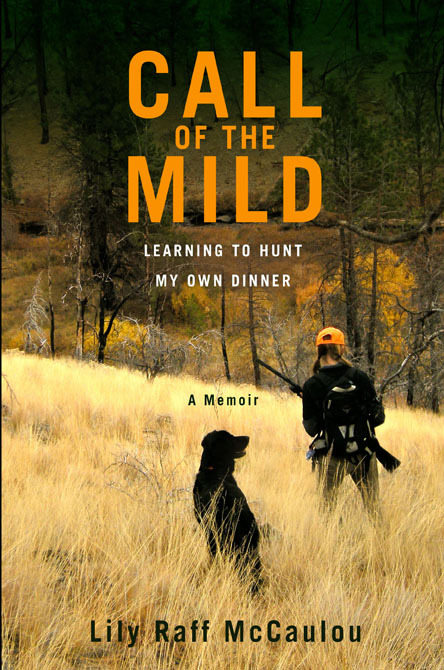
Meaty Tomes: Books on hunting your dinner.
Curious about what exactly mountain lion tastes like, or what would make a completely rational city girl from the East Coast stalk the wilds of eastern Oregon with a gun? Well, the books I reviewed for the Eugene Weekly's December 13, 2012 edition answer those questions and more. If you have cleaned and oiled your guns for winter storage after a long fall hunting season, or if you simply hunger for a adventure in your winter reading list, these reads will entertain and get you thinking about the role of hunting in today's world.
...................................................................................................................................................
CALL OF THE MILD: Learning to Hunt My Own Dinner By Lily Raff McCaulou. Grand Central, $24.99.
MEAT EATER: Adventures from the Life of an American Hunter By Steven Rinella. Spiegal and Grau, $26.

The image many non-hunters have of hunters isn’t pretty. Hunters are callous, camo-clad rednecks in big trucks, gun-nuts unconcerned about their prey and the environment in general. There are boorish hunters to be sure. But let’s not forget, Steven Rinella (American Buffalo, The Scavenger’s Guide to Haute Cuisine) tells us, that America’s first conservationists were avid hunters. And — as Lily Raff McCaulou finds to her own amazement — becoming a hunter might make one a better environmentalist. Digging deeper, both agree that hunting has something to tell us about who we are and how we fit in with the world around us.
McCaulou, raised by uber-hippie parents in suburban Maryland, a stone’s throw from Washington, D.C., is the epitome of the clueless urbanite when she ditches the glamour of the New York film industry to take a newspaper job in Bend in 2003. Assigned a rural beat, McCaulou stumbles onto a discovery: Hunters know an awful lot about the places they hunt. What’s more, the hunters she meets evince a profound love for the animals they pursue and nature in general.
...................................................................................................................................................
CALL OF THE MILD: Learning to Hunt My Own Dinner By Lily Raff McCaulou. Grand Central, $24.99.
MEAT EATER: Adventures from the Life of an American Hunter By Steven Rinella. Spiegal and Grau, $26.
The image many non-hunters have of hunters isn’t pretty. Hunters are callous, camo-clad rednecks in big trucks, gun-nuts unconcerned about their prey and the environment in general. There are boorish hunters to be sure. But let’s not forget, Steven Rinella (American Buffalo, The Scavenger’s Guide to Haute Cuisine) tells us, that America’s first conservationists were avid hunters. And — as Lily Raff McCaulou finds to her own amazement — becoming a hunter might make one a better environmentalist. Digging deeper, both agree that hunting has something to tell us about who we are and how we fit in with the world around us.
McCaulou, raised by uber-hippie parents in suburban Maryland, a stone’s throw from Washington, D.C., is the epitome of the clueless urbanite when she ditches the glamour of the New York film industry to take a newspaper job in Bend in 2003. Assigned a rural beat, McCaulou stumbles onto a discovery: Hunters know an awful lot about the places they hunt. What’s more, the hunters she meets evince a profound love for the animals they pursue and nature in general.
Friday, November 30, 2012
Organic: Food Justice for the 99%
Once again, Unexpected Environments is happy to share a post from the Cornucopia Institute, which
supports strong organic labeling standards and calls out corporate
agribusiness for greenwashing unethical farming practices and diluting
the value of the USDA Organic certification. Charlotte Vallaeys, the institute's Director of Farm and Food Policy, takes Time Magazine to task for continuing the corporate media's campaign to slander organic agriculture as "elitist" and its produce no more healthy than chemically-laced corporate food. For more information, follow this link to the Institute's website.
...................................................................................................................................................
Dr. Oz in Time Magazine slanders Families Who Choose Safe, Organic Food for Their Children
As
Americans become increasingly aware of the story behind conventional
foods—the ecologically destructive monoculture fields, the petrochemical
fertilizers, the toxic pesticides and dangerous fumigants—the
agrochemical industry has launched an all-out media offensive against
the booming organic industry.
The
agrochemical industry’s communications specialists have apparently
found willing partners in major nationwide media outlets like The New York Times and Time
magazine, which have recently published articles discouraging people
from buying organic foods. The message is nearly always the same, as
industry-friendly researchers and reporters downplay the role and harm
caused by agricultural chemicals and focus instead on the differences
between a handful of common nutrients. Despite overwhelming scientific
evidence to the contrary, the conclusion is always that organic foods
are not worth the extra price because the nutritional differences are
minimal.
First,
we must set the record straight. Scientific studies show that milk
from pastured cows contains higher levels of beneficial fats. Beef from
grass-fed cattle and eggs from pastured hens are lower in cholesterol
and saturated fat and higher in healthy omega-3 fatty acids and Vitamins
A and E. Organic strawberries and tomatoes contain more healthy
antioxidants. These are all undisputed facts laid out in a myriad of
published, peer-reviewed scientific papers.
Consumers
increasingly turn to organic and grass-based foods, based on this
scientific evidence that has been reported in magazines, including Time, in recent years. Now, the Dec 3rd issue of Time
mindlessly repeats the agribusiness mantra: “Nutritionally, an egg is
an egg.” Milk is milk. And canned peas, with toxic pesticide residues,
heated to extreme temperatures during processing, and then placed in a
container lined with a suspected endocrine disruptor, are just as
healthy as those for sale at a farmer’s market, picked fresh from a
local field just hours ago.
Sunday, November 25, 2012
Local chicks: Farm-to-table for health meat
This article made the cover of the Eugene Weekly's August 12, 2012 edition. I first met Brandow while working on my article on Community Supported Agriculture.
...................................................................................................................................................
Clad in a worn tan Carhartt jacket and rubber boots as insurance against the rain threatened by a slate-gray, wind-wiped spring afternoon, Derek Brandow is in his element — multiple elements, really. Today, the former elementary school teacher’s classroom is a field of knee-high grass, his young student a potential customer for the community-supported agriculture (CSA) subscriptions that Our Family Farm, his poultry operation, is selling. After raising backyard laying hens for two years and learning about the horrors of factory-scale poultry farms, that customer-to-be, a precocious preteen girl, is determined not to eat chicken unless she can inspect the farm herself and see that the flock is raised under humane conditions and allowed to express their avian nature, their very chicken-ness.
That makes her the perfect customer for Brandow, a part-time poultry grower and local standard-bearer for the farm-to-table movement. A bearded, genial bear of a man, with an ever-present grin crinkling his hazel eyes, Brandow squats beside the slim, bleached blond pre-teen next to a mobile pen, getting on her level and addressing her questions and concerns directly and seriously. He shows no hint of the abruptness or condescension that could be expected of a busy farmer pestered by the questions of a child prying into his world. He explains how he pasture-raises his birds, moving their protective pens about the field daily so that they have fresh grass to crop and bugs to scratch for and how he supplements their diet with locally processed chicken feeds. He gently catches a white-feathered, red-wattled pullet from the flock, bunched close together for warmth and companionship on this blustery day, in order to give the young lady he is clearly charming an up-close introduction.
...................................................................................................................................................
Clad in a worn tan Carhartt jacket and rubber boots as insurance against the rain threatened by a slate-gray, wind-wiped spring afternoon, Derek Brandow is in his element — multiple elements, really. Today, the former elementary school teacher’s classroom is a field of knee-high grass, his young student a potential customer for the community-supported agriculture (CSA) subscriptions that Our Family Farm, his poultry operation, is selling. After raising backyard laying hens for two years and learning about the horrors of factory-scale poultry farms, that customer-to-be, a precocious preteen girl, is determined not to eat chicken unless she can inspect the farm herself and see that the flock is raised under humane conditions and allowed to express their avian nature, their very chicken-ness.
 |
| Derek Brandow appraises one of his young chickens early in the growing season. |
That makes her the perfect customer for Brandow, a part-time poultry grower and local standard-bearer for the farm-to-table movement. A bearded, genial bear of a man, with an ever-present grin crinkling his hazel eyes, Brandow squats beside the slim, bleached blond pre-teen next to a mobile pen, getting on her level and addressing her questions and concerns directly and seriously. He shows no hint of the abruptness or condescension that could be expected of a busy farmer pestered by the questions of a child prying into his world. He explains how he pasture-raises his birds, moving their protective pens about the field daily so that they have fresh grass to crop and bugs to scratch for and how he supplements their diet with locally processed chicken feeds. He gently catches a white-feathered, red-wattled pullet from the flock, bunched close together for warmth and companionship on this blustery day, in order to give the young lady he is clearly charming an up-close introduction.
Tuesday, September 4, 2012
Thinking Outside the Processed Foods Box—Health and Safety Advantages of Organic Food
In a first for Unexpected Environments, I'm sharing a post by another writer. Mark A. Kastel, Senior Farm Policy Analyst at the Cornucopia Institute. The Cornucopia Institute supports strong organic labeling standards and calls out corporate agribusiness when they greenwash unethical farming practices and dilute the value of the USDA Organic certification.
..................................................................................................................................................
..................................................................................................................................................
I have enjoyed a virtually exclusive organic diet for the past 30 years. But I was deeply unsettled by a September 4 New York Times article and a similar Associated Press story casting doubt on the value of an organic diet.
In
terms of the extra cost and value of eating organically, I have always
subscribed to the adage "pay now or pay later." While my personal
experience does not provide much in terms of a scientifically legitimate
sample size, in the last 30 years, after suffering from pesticide
poisoning prompted my shift to an organic diet, I have exceeded my
insurance deductible only once, due to an orthopedic injury. And my
doctor keeps telling me how remarkable it is that I, at age 57, have no
chronic health problems and take no pharmaceuticals.
Unfortunately,
the analysis done by Stanford University physicians profiled in the
articles noted above did not look "outside the box," as many organic
farming and food advocates do.
Friday, August 31, 2012
Mini Goats: Urban homesteading’s final frontier
This article made the cover of the Eugene Weekly's annual Pets Issue, which ran July 25, 2012. My wife inspired this article because of her fascination with mini-goats. Undeniably cute and producers of some outstandingly delicious dairy products, mini goats seemed like a great way for us to raise the bar in our quest for the ultimate urban homestead. As it turns out, the sociable critters would be a terrible fit for our family, because of our rambunctious Labrador/terrier mix, Clyde (a.k.a Bubba Dog). Oh well, I guess we'll just stick with backyard chickens and the theoretical bee hive I'm supposed to build this winter.
...................................................................................................................................................
Urban homesteading, backyard farming — call it what you
will, the movement for self sufficiency and sustainable living is booming. In Eugene
neighborhoods from the South Hills to the Whiteaker it seems like every other
house sports a chicken coop or custom greenhouse. Soon, the most dedicated
local homesteaders may be able to join ranks of urban farming trailblazers
elsewhere who are exploring a new way of bringing the farm to the city: raising
miniature goats.
 |
| Cheryl Smith at Mystic Acres Farms. Photo by Todd Cooper |
While Portland’s
goat-raising community is large enough to organize bike-based tours a la Eugene’s
annual Tour De Coop, potential goat farmers here face a more elementary
challenge: working with the city government to legalize mini goats on
normal-sized city lots. Currently, the city of Eugene’s
municipal code lumps miniature goats in with all farm animals besides rabbits
and chickens, banning such livestock on lots smaller than 20,000 square feet,
or almost half an acre. The code also requires 5,000 square feet of space for
each goat over six months old. Earlier this year, the Eugene City Council
directed the planning department to come up with a revised livestock code
balancing the demand for micro livestock with the requirements of an
increasingly dense urban environment.
Friday, August 17, 2012
Community Supported Agriculture: Good growing on so many levels
..................................................................................................................................................
You’ll forgive me if I didn’t put too much thought into my first experience with Community Supported Agriculture (CSA). When my college housemate suggested that we split a share in a local CSA farm, I thought a farm share might be a convenient way to cut down on shopping while getting a box of fresh produce every week. I liked the fact that the box contained a newsletter detailing events on the farm and recipes for the vegetables and root crops inside. The recipes came in handy. I had never even heard of some of those crops, much less cooked them before.
It was much later, when my family began to make a concerted effort to eat as sustainably and as close to home as possible, that I began to really understand the full impact of CSA participation on local food webs. A share in a CSA farm connects a consumer in a meaningful way to the local agricultural community. CSAs support small farmers, ensuring that diverse crops and heirloom varieties are available locally. Perhaps more importantly, they play a vital role in regional food security in an era where climate change and economic instability appear set to transform global food availability.
 |
| My daughter Lily inspects the chicks at Our Family Farm before we joined the CSA program. |
Tuesday, June 19, 2012
Beyond Organic
This article first appeared in the 2011/2012 edition of the Natural Choice Directory for the Willamette Valley. Before researching this article, I had read a little bit about the ongoing struggles over organic standards, and believed, like most consumers, that if I simply purchased organic products I was doing my part to support holistic farming practices. Since then, I've made a much more concerted effort to know where my food comes from and how it is produced and to eat as locally as possible.
.................................................................................................................................................
Clad in a neat plaid shirt and slightly faded denim jeans, silver-gray hair swept back in a loose ponytail, Girard looks every inch the successful, eco-conscious winemaker you’d expect to find in the Pacific Northwest. But Girard’s Benton-Lane Winery, by his careful choice, doesn’t boast the USDA Organic label on its bottles, that . Girard remains unconvinced that organic’s standards, despite organic’s reputation for earth-friendly growing practices and a very marketable cache, fit his goal of husbanding the vineyard so that vintners a millennium from now might still make great wine from grapes grown on his soil.
In an effort to enhance the nutritive quality of the food they grow
and the health of the soil they depend on, individualistic small farmers
like Girard are forgoing organic certification in favor of growing
methods they say go beyond national organic standards watered-down at
the behest of big agri-business. While this “beyond organics” movement
has yet to coalesce around a central organization, campaign or guiding
light, it has excited some food writers and activists while putting
those invested in USDA Organics, the current environmental gold
standard, on the defensive. Organic activists maintain a constant
vigilance lest corporate interests further weaken the standards in an
effort to better their profit margins. They question whether “beyond
organic” claims are more holier-than-though rhetoric than verifiable
advances in the quest to align modern farming with the ecology of
place.
.................................................................................................................................................
Weakening of certified label or push back against corporate industrialization of organic?
In the building heat of a sunny May afternoon, Steve Girard drives down a dirt road cutting across the slopes of his 141-acre hillside vineyard overlooking the rolling pastoral countryside of the Willamette Valley. Scanning row upon row of carefully pruned and trussed vines breaking into bud, Girard muses about the history of his vineyard and the changes he has fostered over years of careful stewardship. “Through my methods I have seen not only (increased) vine health, but incredible changes in my juice nutrient profile,” Girard says.
Clad in a neat plaid shirt and slightly faded denim jeans, silver-gray hair swept back in a loose ponytail, Girard looks every inch the successful, eco-conscious winemaker you’d expect to find in the Pacific Northwest. But Girard’s Benton-Lane Winery, by his careful choice, doesn’t boast the USDA Organic label on its bottles, that . Girard remains unconvinced that organic’s standards, despite organic’s reputation for earth-friendly growing practices and a very marketable cache, fit his goal of husbanding the vineyard so that vintners a millennium from now might still make great wine from grapes grown on his soil.
 |
| Steve Girard studies a handful of ripening compost that will nurture his vineyard's soil. |
Tuesday, May 22, 2012
Stamp of approval
Sometimes you're the writer,
sometimes you're the subject. Well, actually, about ninety nine percent of the
time I'm the writer (that's kinda of the deal with being an environmental
journalist). So it's kind of weird/cool to be written about, especially by the subject of your
work.
Seriously, though, I'm sure Derek
at Our Family Farm wouldn't have blogged about my recent visit if I had come alone.
Derek probably didn't expect an intelligent, inquisitive pre-teen to come
stocked with questions about his animal husbandry practices and ethical
outlook. But he certainly was ready for it. As a parent, I appreciated the serious
way he addressed Lily's queries instead of adopting a condescending tone or
simply brushing her off. He must have been a good teacher. I'm glad he decided
to become a chicken farmer. We bought a CSA
share after that visit and roasted the first bird last week after letting it
soak it overnight in kalamata olive brine. Delicious! Add my stamp of approval to Lily's.
I'm also glad I took Lily, both from
an ethical eating and a parenting standpoint. Two years ago we stumbled into backyard
chicken raising, thanks to a stray black pullet that wandered into my neighbors
yard one night – scared the bejesus out of her by flying up onto her shoulder
when she let her dog out. We took the pullet, which quickly grew into a magnificent Black
Austrolorp hen in need of company. Two years later and we have a flock of four
laying hens, a sharp-looking cedar coop, thanks to yours truly, and a daughter
with a much more developed dietary ethic.
 |
| Lily with Sakura (Japanese for Cherry Blossom) during our first year raising hens. |
Local is global
A shop that sells organic, locally grown fresh vegetables - tomatoes, spinach, chillies,
carrots, fennel, aubergines, peppers, lettuce, okra, watercress,
potatoes and beetroot - plus locally made chutney, mozzarella and ricotta, freshly baked bread and gluten free cookies, biscotti, bread and
cakes. Nothing special there, right? Sounds like what you'd expect from any food co-op or higher end grocery store in Eugene, or any other reasonably hip college town or big American city.
The catch? The store in question, the newly opened Ripe Farm Shop, isn't in some Pacific Northwest hipster neighborhood. It's a farmer's market done Dubai style. Located in the town of Umm Suqeim, the shop is part of an expanding business catering to Dubai consumers who want fresh, local, organic food and craft goods. What a concept, right.
It may be that the Ripe Farm Shop is catering to an elite ex-pat community. Even so, it's reassuring to see that see that people halfway around the globe are as supportive of local food webs as we are here. And, hey, if I ever land a reporting gig in the United Arab Emirates, I'll know where to shop, so there's that.
The catch? The store in question, the newly opened Ripe Farm Shop, isn't in some Pacific Northwest hipster neighborhood. It's a farmer's market done Dubai style. Located in the town of Umm Suqeim, the shop is part of an expanding business catering to Dubai consumers who want fresh, local, organic food and craft goods. What a concept, right.
It may be that the Ripe Farm Shop is catering to an elite ex-pat community. Even so, it's reassuring to see that see that people halfway around the globe are as supportive of local food webs as we are here. And, hey, if I ever land a reporting gig in the United Arab Emirates, I'll know where to shop, so there's that.
Subscribe to:
Posts (Atom)