Monday, December 17, 2012

Meaty Tomes: Books on hunting your dinner.

Curious about what exactly mountain lion tastes like, or what would make a completely rational city girl from the East Coast stalk the wilds of eastern Oregon with a gun? Well, the books I reviewed for the Eugene Weekly's December 13, 2012 edition answer those questions and more. If you have cleaned and oiled your guns for winter storage after a long fall hunting season, or if you simply hunger for a adventure in your winter reading list, these reads will entertain and get you thinking about the role of hunting in today's world. 

...................................................................................................................................................

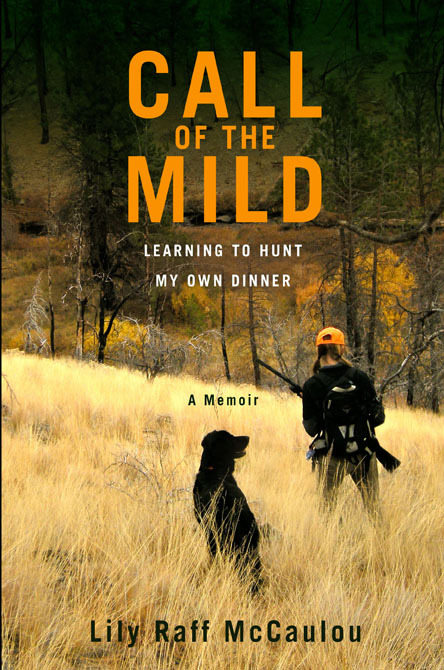
CALL OF THE MILD: Learning to Hunt My Own Dinner By Lily Raff McCaulou. Grand Central, $24.99.
MEAT EATER: Adventures from the Life of an American Hunter By Steven Rinella. Spiegal and Grau, $26.


The image many non-hunters have of hunters isn’t pretty. Hunters are callous, camo-clad rednecks in big trucks, gun-nuts unconcerned about their prey and the environment in general. There are boorish hunters to be sure. But let’s not forget, Steven Rinella (American Buffalo, The Scavenger’s Guide to Haute Cuisine) tells us, that America’s first conservationists were avid hunters. And — as Lily Raff McCaulou finds to her own amazement — becoming a hunter might make one a better environmentalist. Digging deeper, both agree that hunting has something to tell us about who we are and how we fit in with the world around us.

McCaulou, raised by uber-hippie parents in suburban Maryland, a stone’s throw from Washington, D.C., is the epitome of the clueless urbanite when she ditches the glamour of the New York film industry to take a newspaper job in Bend in 2003. Assigned a rural beat, McCaulou stumbles onto a discovery: Hunters know an awful lot about the places they hunt. What’s more, the hunters she meets evince a profound love for the animals they pursue and nature in general.

Friday, November 30, 2012

Organic: Food Justice for the 99%

 Once again, Unexpected Environments is happy to share a post from the Cornucopia Institute, which supports strong organic labeling standards and calls out corporate agribusiness for greenwashing unethical farming practices and diluting the value of the USDA Organic certification. Charlotte Vallaeys, the institute's Director of Farm and Food Policy, takes Time Magazine to task for continuing the corporate media's campaign to slander organic agriculture as "elitist" and its produce no more healthy than chemically-laced corporate food. For more information, follow this link to the Institute's website.
...................................................................................................................................................

Dr. Oz in Time Magazine slanders Families Who Choose Safe, Organic Food for Their Children 


 As Americans become increasingly aware of the story behind conventional foods—the ecologically destructive monoculture fields, the petrochemical fertilizers, the toxic pesticides and dangerous fumigants—the agrochemical industry has launched an all-out media offensive against the booming organic industry. 

The agrochemical industry’s communications specialists have apparently found willing partners in major nationwide media outlets like The New York Times and Time magazine, which have recently published articles discouraging people from buying organic foods.  The message is nearly always the same, as industry-friendly researchers and reporters downplay the role and harm caused by agricultural chemicals and focus instead on the differences between a handful of common nutrients.  Despite overwhelming scientific evidence to the contrary, the conclusion is always that organic foods are not worth the extra price because the nutritional differences are minimal.

First, we must set the record straight.  Scientific studies show that milk from pastured cows contains higher levels of beneficial fats.  Beef from grass-fed cattle and eggs from pastured hens are lower in cholesterol and saturated fat and higher in healthy omega-3 fatty acids and Vitamins A and E.  Organic strawberries and tomatoes contain more healthy antioxidants.  These are all undisputed facts laid out in a myriad of published, peer-reviewed scientific papers.

Consumers increasingly turn to organic and grass-based foods, based on this scientific evidence that has been reported in magazines, including Time, in recent years.  Now, the Dec 3rd issue of Time mindlessly repeats the agribusiness mantra: “Nutritionally, an egg is an egg.”  Milk is milk. And canned peas, with toxic pesticide residues, heated to extreme temperatures during processing, and then placed in a container lined with a suspected endocrine disruptor, are just as healthy as those for sale at a farmer’s market, picked fresh from a local field just hours ago.

Sunday, November 25, 2012

Local chicks: Farm-to-table for health meat

This article made the cover of the  Eugene Weekly's August 12, 2012 edition. I first met Brandow while working on my article on Community Supported Agriculture.

...................................................................................................................................................

Clad in a worn tan Carhartt jacket and rubber boots as insurance against the rain threatened by a slate-gray, wind-wiped spring afternoon, Derek Brandow is in his element — multiple elements, really. Today, the former elementary school teacher’s classroom is a field of knee-high grass, his young student a potential customer for the community-supported agriculture (CSA) subscriptions that Our Family Farm, his poultry operation, is selling. After raising backyard laying hens for two years and learning about the horrors of factory-scale poultry farms, that customer-to-be, a precocious preteen girl, is determined not to eat chicken unless she can inspect the farm herself and see that the flock is raised under humane conditions and allowed to express their avian nature, their very chicken-ness.

Derek Brandow appraises one of his young chickens early in the growing season.

That makes her the perfect customer for Brandow, a part-time poultry grower and local standard-bearer for the farm-to-table movement. A bearded, genial bear of a man, with an ever-present grin crinkling his hazel eyes, Brandow squats beside the slim, bleached blond pre-teen next to a mobile pen, getting on her level and addressing her questions and concerns directly and seriously. He shows no hint of the abruptness or condescension that could be expected of a busy farmer pestered by the questions of a child prying into his world. He explains how he pasture-raises his birds, moving their protective pens about the field daily so that they have fresh grass to crop and bugs to scratch for and how he supplements their diet with locally processed chicken feeds. He gently catches a white-feathered, red-wattled pullet from the flock, bunched close together for warmth and companionship on this blustery day, in order to give the young lady he is clearly charming an up-close introduction.

Tuesday, September 4, 2012

Thinking Outside the Processed Foods Box—Health and Safety Advantages of Organic Food

In a first for Unexpected Environments,  I'm sharing a post by another writer. Mark A. Kastel, Senior Farm Policy Analyst at the Cornucopia Institute. The Cornucopia Institute supports strong organic labeling standards and calls out corporate agribusiness when they greenwash unethical farming practices and dilute the value of the USDA Organic certification. 

..................................................................................................................................................

I have enjoyed a virtually exclusive organic diet for the past 30 years.  But I was deeply unsettled by a September 4 New York Times article and a similar Associated Press story casting doubt on the value of an organic diet.

In terms of the extra cost and value of eating organically, I have always subscribed to the adage "pay now or pay later."  While my personal experience does not provide much in terms of a scientifically legitimate sample size, in the last 30 years, after suffering from pesticide poisoning prompted my shift to an organic diet, I have exceeded my insurance deductible only once, due to an orthopedic injury.  And my doctor keeps telling me how remarkable it is that I, at age 57, have no chronic health problems and take no pharmaceuticals.

Unfortunately, the analysis done by Stanford University physicians profiled in the articles noted above did not look "outside the box," as many organic farming and food advocates do.

Friday, August 31, 2012

Mini Goats: Urban homesteading’s final frontier


This article made the cover of the  Eugene Weekly's annual Pets Issue, which ran July 25, 2012. My wife inspired this article because of her fascination with mini-goats. Undeniably cute and producers of some outstandingly delicious dairy products, mini goats seemed like a great way for us to raise the bar in our quest for the ultimate urban homestead. As it turns out, the sociable critters would be a terrible fit for our family, because of our rambunctious Labrador/terrier mix, Clyde (a.k.a Bubba Dog). Oh well, I guess we'll just stick with backyard chickens and the theoretical bee hive I'm supposed to build this winter.

...................................................................................................................................................

Urban homesteading, backyard farming — call it what you will, the movement for self sufficiency and sustainable living is booming. In Eugene neighborhoods from the South Hills to the Whiteaker it seems like every other house sports a chicken coop or custom greenhouse. Soon, the most dedicated local homesteaders may be able to join ranks of urban farming trailblazers elsewhere who are exploring a new way of bringing the farm to the city: raising miniature goats. 

Cheryl Smith at Mystic Acres Farms. Photo by Todd Cooper
While Portland’s goat-raising community is large enough to organize bike-based tours a la Eugene’s annual Tour De Coop, potential goat farmers here face a more elementary challenge: working with the city government to legalize mini goats on normal-sized city lots. Currently, the city of Eugene’s municipal code lumps miniature goats in with all farm animals besides rabbits and chickens, banning such livestock on lots smaller than 20,000 square feet, or almost half an acre. The code also requires 5,000 square feet of space for each goat over six months old. Earlier this year, the Eugene City Council directed the planning department to come up with a revised livestock code balancing the demand for micro livestock with the requirements of an increasingly dense urban environment.

Friday, August 17, 2012

Community Supported Agriculture: Good growing on so many levels

This article first appeared in the 2012/2013 edition of the Natural Choice Directory for the Willamette Valley. When  publisher Larry Fried asked me if I wanted to write an article for the NCD about CSA agriculture, the timing could not have been better. I had just signed up with a local raw-dairy herdshare and was planning to visit a local chicken farmer to determine if our family wanted to subscribe to his CSA program. I was inspired to use my own experiences with CSAs as the narrative structure for the article.

..................................................................................................................................................

You’ll forgive me if I didn’t put too much thought into my first experience with Community Supported Agriculture (CSA). When my college housemate suggested that we split a share in a local CSA farm, I thought a farm share might be a convenient way to cut down on shopping while getting a box of fresh produce every week. I liked the fact that the box contained a newsletter detailing events on the farm and recipes for the vegetables and root crops inside. The recipes came in handy. I had never even heard of some of those crops, much less cooked them before.

It was much later, when my family began to make a concerted effort to eat as sustainably and as close to home as possible, that I began to really understand the full impact of CSA participation on local food webs. A share in a CSA farm connects a consumer in a meaningful way to the local agricultural community. CSAs support small farmers, ensuring that diverse crops and heirloom varieties are available locally. Perhaps more importantly, they play a vital role in regional food security in an era where climate change and economic instability appear set to transform global food availability.

My daughter Lily inspects the chicks at Our Family Farm before we joined the CSA program.

Tuesday, June 19, 2012

Beyond Organic

This article first appeared in the 2011/2012 edition of the Natural Choice Directory for the Willamette Valley.  Before researching this article, I had read a little bit about the ongoing struggles over organic standards, and believed, like most consumers, that if I simply purchased organic products I was doing my part to support holistic farming practices. Since then, I've made a much more concerted effort to know where my food comes from and how it is produced and to eat as locally as possible. 

................................................................................................................................................. 

 Weakening of certified label or push back against corporate industrialization of organic?


In the building heat of a sunny May afternoon, Steve Girard drives down a dirt road cutting across the slopes of his 141-acre hillside vineyard overlooking the rolling pastoral countryside of the Willamette Valley. Scanning row upon row of carefully pruned and trussed vines breaking into bud, Girard muses about the history of his vineyard and the changes he has fostered over years of careful stewardship. “Through my methods I have seen not only (increased) vine health, but incredible changes in my juice nutrient profile,” Girard says.

Clad in a neat plaid shirt and slightly faded denim jeans, silver-gray hair swept back in a loose ponytail, Girard looks every inch the successful, eco-conscious winemaker you’d expect to find in the Pacific Northwest. But Girard’s Benton-Lane Winery, by his careful choice, doesn’t boast the USDA Organic label on its bottles, that . Girard remains unconvinced that organic’s standards, despite organic’s reputation for earth-friendly growing practices and a very marketable cache, fit his goal of husbanding the vineyard so that vintners a millennium from now might still make great wine from grapes grown on his soil.

Steve Girard studies a handful of ripening compost that will nurture his vineyard's soil.
In an effort to enhance the nutritive quality of the food they grow and the health of the soil they depend on, individualistic small farmers like Girard are forgoing organic certification in favor of growing methods they say go beyond national organic standards watered-down at the behest of big agri-business. While this “beyond organics” movement has yet to coalesce around a central organization, campaign or guiding light, it has excited some food writers and activists while putting those invested in USDA Organics, the current environmental gold standard, on the defensive. Organic activists maintain a constant vigilance lest corporate interests further weaken the standards in an effort to better their profit margins. They question whether “beyond organic” claims are more holier-than-though rhetoric than verifiable advances in the quest to align modern farming with the ecology of place.